
Why resilience is the wrong answer, and what leaders actually need when the pressure never lets up
Somewhere in your organisation right now, someone is writing a brief that includes the word resilience. A leadership programme, a keynote request, an away day agenda. The intention is good, the diagnosis is wrong, and the gap between the two is costing leadership teams more than they realise.
I have spent a lot of time this year talking to CHROs, event planners and leadership teams, and the same request keeps arriving in slightly different clothing. Our leaders need to be more resilient. We need to help people bounce back. Can you do a session on recovering from setbacks?
Here is the problem. Resilience, as the word is now used, means recovery from an event. A failed launch, a brutal quarter, a restructure that left scar tissue. Something happened, it hurt, and now we need to get back up.
But look honestly at the conditions your leadership team is operating in. Which event, exactly, are they recovering from? The pressure they are under is not an episode with a beginning and an end. Margins have been tight for years and show no sign of loosening. Stakeholders want more, faster, with less. The technology landscape reinvents itself roughly every time you finish updating the strategy deck to reflect the last reinvention. There is no calm on the other side of this weather system, because there is no other side.
This is the thing I have been saying to clients for some time now, and it is the premise everything else in this piece rests on.
Turbulence is not an interruption to normal operations. Turbulence is the operating system.
The Idea: you cannot recover from a permanent condition
Resilience frameworks assume a rhythm: stability, disruption, recovery, stability. That rhythm made sense when disruption was occasional. It does not describe the world your executive team wakes up to.
When pressure is episodic, recovery is the right skill. When pressure is continuous, recovery is a category error, it is like training a flight crew to handle one dramatic emergency while ignoring the fact that the entire job is managing changing conditions, incomplete information and consequential decisions, sector after sector, day after day.
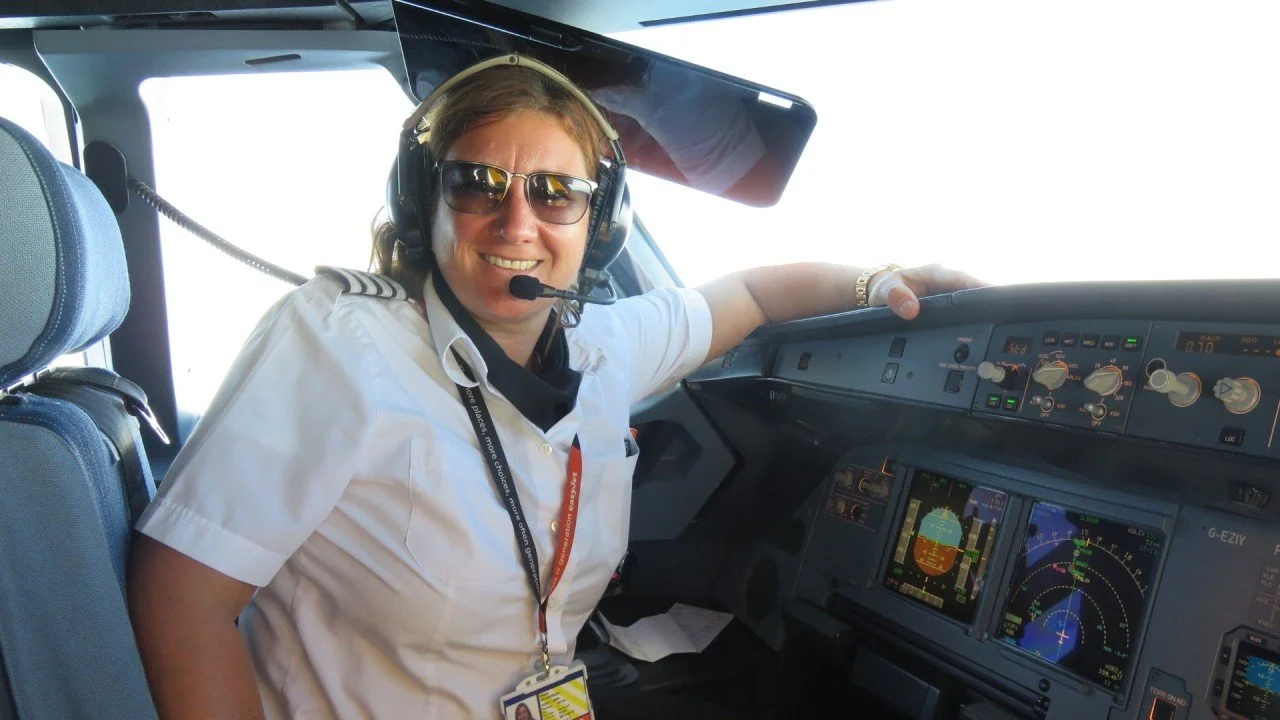
I flew commercially for more than thirty years, most of that on the Airbus A320, and I can tell you that aviation worked this out a long time ago. We did not train pilots to bounce back from turbulence. We trained them to operate inside it. The assumption baked into everything, the procedures, the briefings, the culture, was that conditions would change, information would be incomplete, and decisions would still need to be made. Not once, at the dramatic climax of a story, but repeatedly, as the ordinary texture of the work.
That distinction is the whole argument, so let me put it as plainly as I can.
Resilience helps people recover after turbulence. What leaders need now is the ability to continue operating within it.
Those are different capabilities. They are trained differently, they feel different under pressure, and organisations that keep buying the first one while needing the second will keep wondering why the off-sites and the coaching and the wellbeing programmes are not moving the needle.
Underneath all of this sits a simple, uncomfortable truth. The operating system has changed. Leadership hasn't caught up.
The System: what sustained pressure does to judgement
Here is what nobody puts on the leadership programme brochure. Prolonged uncertainty does not just make people tired. It degrades judgement in specific, predictable ways.
When pressure rises and stays risen, most of us instinctively reach for certainty. We behave confidently, perhaps as much to convince ourselves as to convince the people we lead. In a boardroom this sounds entirely reasonable. We know what the market wants. The problem is execution. Stakeholders need confidence, so let's present a firm answer. We don't have time to debate this.
None of those sentences sounds like a failure of leadership. Every one of them can be.
The danger is not confidence, leaders need confidence. The danger is false certainty: becoming more committed to sounding sure than to understanding what is actually happening. Under sustained pressure, false certainty is seductive because it feels like leadership. It calms the room, it shortens the meeting, it gives everyone permission to stop sitting with the discomfort of not knowing. It also, reliably, produces worse decisions, because the complexity did not go away when you stopped acknowledging it. It just went underground, where it waits.
Aviation has a deep respect for this failure mode, because we have seen where it leads. Some of the most sobering case studies in flight safety are not about pilots who lacked skill. They are about crews who committed early to a picture of the situation and then bent every new piece of information to fit it. The industry built entire disciplines, human factors, crew resource management, structured decision models, specifically to protect judgement from the effects of pressure. Not because pilots are weak, but because everyone's judgement degrades under sustained load, and pretending otherwise is how accidents happen.
The corporate world has not yet fully accepted this about its own leaders. It still treats clear thinking under pressure as a character trait some people have, rather than a capability that has to be deliberately protected and trained. (Aviation stopped believing in the naturally unflappable pilot decades ago, roughly around the time the data made the belief untenable.)
What does protected judgement actually sound like? It sounds like a leader who can stand in front of their team and say: here is what I know, here is what I don't know yet, here are the assumptions I'm making, here is what would tell us those assumptions are wrong, and here is what we will do if they are. That is not weakness, it is not indecision, it is not a failure to project confidence. It is the most confident thing a leader can do, because it takes far more composure to hold complexity openly than to collapse it into a neat answer because everyone in the room is anxious.
The Organisation: what thirty years of flying teaches
I want to be precise about where my authority on this comes from, because the speaking circuit is full of aviation-adjacent stories and they are not all the same.
I was not trained for one extraordinary mission. I spent three decades making repeated, consequential decisions in an environment where uncertainty was normal rather than exceptional, where information was frequently incomplete, where delaying a decision was itself a decision, and where the consequences of getting it wrong were measured in the lives of the people sitting behind me. Hundreds of them, every sector, every day.
That environment teaches you something that a single expedition, however remarkable, cannot. It teaches you that performing under pressure is not an act of heroism. It is a system. Calm is not something certain people are born with, it is the output of structure, and structure is trainable.
Let me give you one example of what that looked like in practice.
We were on the third sector of a four-sector day, running late out of Glasgow towards Berlin Schönefeld, where a night curfew was in force. We had seen the problem coming and negotiated a solution: Berlin agreed we could land, deliver passengers and bags, then fly back to London with passengers only, their luggage following the next day. We had a plan, it was agreed with the airport, and everyone on the flight deck was content with it (including the training captain in the right-hand seat, who happened to be there that day to assess how I was handling command, so no pressure at all).
Then a message arrived from operations. Divert to Rostock.
Our first response, once we had established where Rostock actually was (a joint military and civilian airfield, filed in a different manual, which tells you how often we went there), was to push back. We explained that we had already negotiated the landing with Berlin and intended to continue. The reply came straight back: divert to Rostock, acknowledge. We queried it once more, the instruction came a third time, and at that point the discipline is unambiguous. You comply, because the people issuing the instruction may be working from information you cannot see from the flight deck. I told the passengers in the air that we were diverting, and that I would give them more information on the ground when I had more to give.
On the ground, I went back into the cabin to speak to them, and they went mad. Shouting, mostly in German, including at least one word about me that I am choosing not to translate here. What they did not know was that I speak fluent enough German to know what they were saying. I took the PA, told them I could not help them while everyone was shouting, and added that I had understood every single word. Half the cabin laughed, the other half suddenly found the floor very interesting. Then I explained what had happened, why, and exactly how they would get to Berlin. They were not happy, but they were calmer, and they had a plan they could believe. One woman asked whether I had children. Three teenagers, I told her. She nodded as though that explained everything.
We flew back to London empty.
The point of that story is not that I stayed calm, it is what the calm was made of. Nothing about that evening was the plan I wanted. I argued for my plan, twice, and then executed someone else's, because the system I operated in understood something most organisations do not: challenge is a duty, but so is commitment once the decision is made, and the person facing the passengers still owns the outcome either way. Notice too what I did not do. I did not invent a reassuring story in the air to make an angry cabin feel better sooner, I told them what I knew, told them when they would hear more, and then stood in front of them in person and took what came. Every element of that, the staged communication, the refusal to speculate, the composure in the cabin, was trained, none of it depended on how I was feeling about my evening (which, for the record, was not warmly). The structure creates the calm. The calm creates the better outcome. It runs in that order, and most leadership development gets the order backwards, trying to manufacture calm as a feeling in the hope that good decisions will follow.
This is what I mean by Grounded Leadership. Not leadership that never leaves the ground (the irony is noted), but leadership that stays grounded in facts rather than assumptions, in process rather than adrenaline, in what is actually happening rather than what everyone is hoping is happening. Leaders who are grounded in this sense do three things reliably under pressure. They stay calm, because their state is managed before it manages the situation. They find clarity, because they have a method for separating facts, assumptions, risks and noise. They take command, which means making the decision, communicating it honestly, and remaining accountable for adjusting it when the picture changes.
Calm. Clarity. Command. That is the promise. The question is how you get there when the pressure is real and the information is not complete, and the answer is not a mindset. It is a method.
The Practice: AVIATE, or how to make a defensible decision without all the answers
Every airline pilot is trained in structured decision-making, because aviation learned that under pressure, humans do not rise to the occasion, they fall back on their training. If the training is a memorised sequence for how to think, then falling back on it is exactly what you want.
AVIATE is my six-step decision-making framework, built from that aviation discipline and shaped over five years of work with leadership teams into something a board can use on a Tuesday afternoon, with no jet required.
Aviate. Fly the plane. Whatever else is happening, someone's first job is to stop the aircraft falling out of the sky, because no problem gets solved from a cockpit that has lost control. The leadership translation is the one most crisis-hit organisations skip: before you solve anything, stabilise the thing that keeps you airborne. Keep the operation running, keep serving customers, keep the team functioning, because a leadership team that drops everything to stare at the problem has just created a second one.
Validate. Check you are dealing with the right problem. Warnings can mislead, symptoms are not causes, and the loudest alarm is not always the one that matters. In a boardroom this is the step that false certainty destroys first, because the presenting problem (sales are down, morale is low, the launch failed) is often not the actual problem, and a team that commits early to the wrong diagnosis will execute a perfect solution to a problem it does not have.
Investigate. Get your facts straight, because facts are the only thing you can base a decision on. Everything else, however confidently it is said in the meeting, is assumption, and the discipline here is knowing which is which. This is where clarity is actually manufactured: separating what you know from what you believe, and being honest about the size of the gap.
Assess. Generate your options, then risk assess them. Identify the threats and the errors, work out how you will manage them, and then decide, because this step ends in a decision and there is no version of it that does not. Not deciding is still a decision, it is just the one you made by default, without owning it.
Talk. Communicate with the people who need to know. Not necessarily everyone, and this distinction matters more than it sounds. Broadcasting everything to everybody feels transparent and mostly produces noise, while the people who actually need the information to do their jobs wait their turn behind an all-staff email. Precision of communication is part of the decision, not an afterthought to it.
Execute. Act on the decision, otherwise there was no point making it. Organisations are full of decisions that were made impeccably in the meeting and then died in the minutes. A decision that is not executed is just an opinion with better paperwork.
What AVIATE gives a leadership team is not a guarantee of the right answer, nothing can promise that when certainty does not exist. What it gives them is a defensible decision: one where the facts were separated from the assumptions, the risks were named rather than wished away, the least-worst option was chosen consciously when no good option existed, and the review was built in from the start, so that changing course later is an update rather than an admission of failure.
That last point matters more than it sounds. In organisations gripped by false certainty, changing a decision is treated as evidence the leader got it wrong, so leaders defend dying strategies long past the point the data turned against them. In a cockpit, revising the plan when conditions change is not failure. It is the job. Building that norm into a leadership team, the expectation that decisions come with review points and that adjustment is a sign of judgement rather than weakness, might be the single highest-value cultural transfer aviation has to offer the boardroom.
Where this leaves you
If you lead a team, or you design development for people who do, the question I would put in front of you is not whether your people are resilient enough. It is whether they have a trained method for continuing to think clearly, decide well and bring people with them when the pressure does not let up, because it is not going to let up.
The organisations that thrive over the next decade will not be the ones that recover fastest from turbulence. They will be the ones that stopped waiting for it to end, and built their leadership around operating inside it. Aviation made that shift generations ago, out of necessity, and wrote the discipline down. The transfer is available to anyone willing to treat clear thinking under pressure as a system rather than a personality. That transfer is what Grounded Leadership is, the operating discipline for leading when certainty is not available.
Turbulence is the operating system now. The only real choice left is whether your leaders are trained for it.
So let me ask you directly. If certainty is not coming back, what is your leadership team's actual method for deciding without it? And if the honest answer is "the confidence of whoever speaks loudest in the room", how long are you comfortable flying like that?