
Last weekend I travelled to Edinburgh for the State Opening of the Scottish Parliament, invited as one of Scotland’s Local Heroes. It was a genuinely special occasion - and as a bonus, I had the opportunity to meet the King and Queen. Memorable for all the right reasons.
The leadership lesson, however, came later that afternoon.
My husband and one of my daughters were flying to Bristol. My other daughter was driving to collect them, while I was making my way home by train from Edinburgh.
Simple enough, until, somewhere south of Edinburgh, I realised I’d made a mistake. The accommodation I was convinced I’d booked for Saturday night was actually booked from Sunday. None of us had anywhere to stay. A few minutes later, another curve ball appeared - my train beyond Bristol had been cancelled. Suddenly I had no way of reaching my family, nowhere to stay when I got there, and three people’s plans all depending on whatever happened next.
If you’ve ever had one of those moments where a carefully constructed plan starts to unravel in real time, you’ll know exactly what that feels like. There’s no pause button. No opportunity to wait until you have every piece of information before you decide what to do.
Just uncertainty.
We worked it out. We found another solution, adjusted the plan, and everyone ended up exactly where they needed to be, but it is a shining example of something that I think we consistently get wrong in leadership.
We wait for certainty that was never coming.
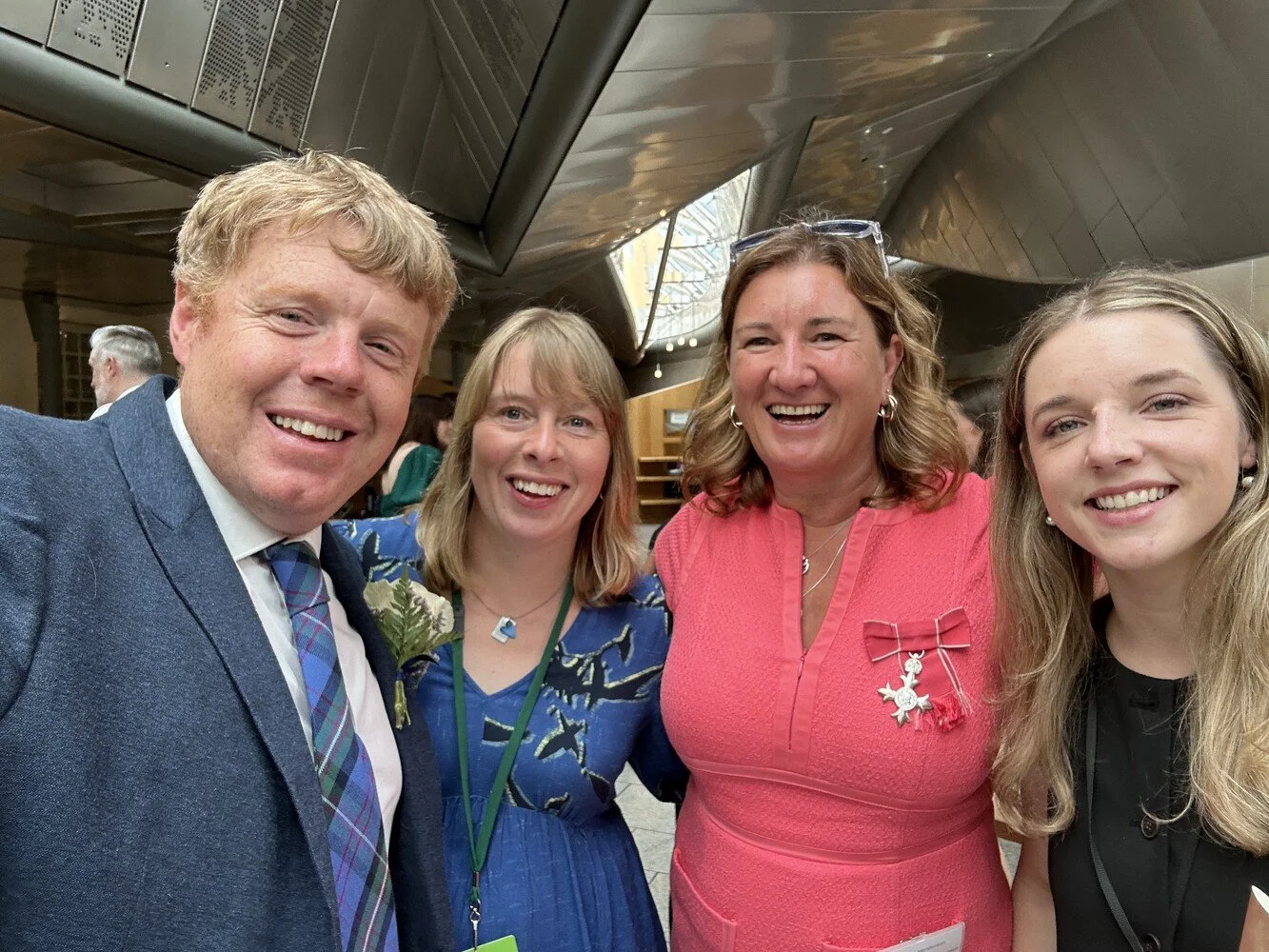
In the Scottish Parliament in Edinburgh with MSP Tim Eagle, Rachel Eagle and Kristy Jennings
The myth we tell ourselves
Most of us, if we’re honest, believe that good leaders make decisions because they are certain.
“In reality, good leaders make decisions despite not being certain - and that is a very different thing.”
As an airline captain, I was never expected to know everything. Weather changes, aircraft develop technical issues, airspace closes, passengers become unwell. Every flight contains variables that simply cannot be predicted. If we waited for complete certainty before making a decision, we’d still be sitting on the stand long after everyone else had gone home.
Instead, we do something different. We gather the best information available, we assess the risks, we consider the options, and we choose the safest and most appropriate course of action with what we have. Then we commit. Not because we’re certain, but because waiting has become the greater risk.
Certainty is rarely the destination
One of the biggest shifts in my thinking over the years has been recognising that certainty isn’t something you discover before you act. It’s something people often expect to feel after they’ve already acted.
“Confidence frequently follows commitment. Clarity often arrives because you’ve moved, not before you move.”
That doesn’t mean rushing into decisions - preparation matters, information matters, risk matters. But there comes a point where collecting more information stops improving the decision and simply delays it. That’s where leadership begins. Not when every answer has appeared, but when you’ve done enough thinking to move forward responsibly.
Saturday afternoon was a useful reminder. I didn’t have the full picture. I had enough - and enough had to do.
Bringing it back to the centreline
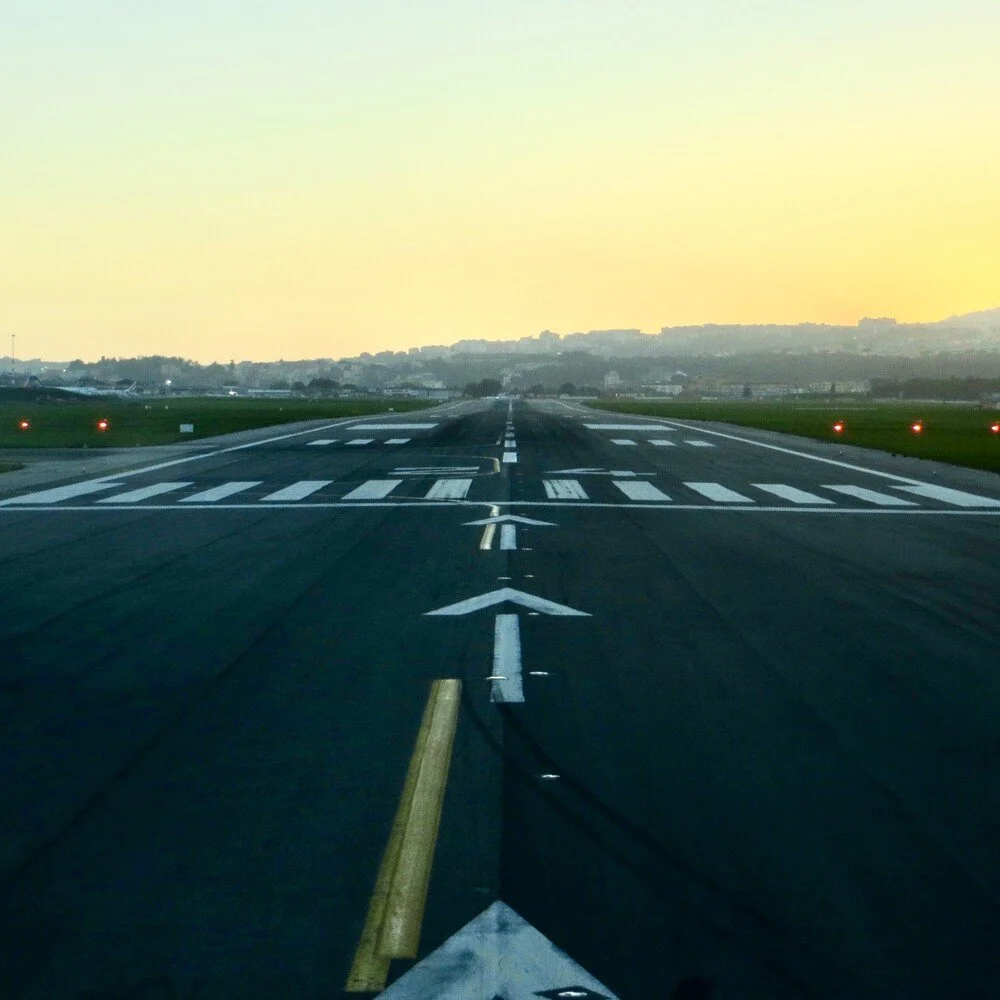
Centreline of Runway 24 at Naples International Airport, Italy
In recent issues I’ve talked about turbulence as the operating system - not a season to survive but the terrain we’re all navigating. Uncertainty is part of that same reality.
We don’t fly by achieving perfection. We make continuous, often tiny, corrections - staying aligned despite conditions that are constantly changing. The goal was never to eliminate uncertainty. The goal is to navigate it well.
“The leaders I know who thrive rather than survive, aren’t those who somehow avoid the turbulence. They’re the ones who have stopped waiting for it to pass and learned to fly inside it instead.”
This section appears in every issue: a real-world situation that comes up again and again, and a way of thinking it through that brings you back to centreline.
“I have a big decision to make and two very senior people on my team who completely disagree on the best way forward. Neither option is perfect. I keep waiting for more information to make it clearer but the deadline is getting closer and I can feel the decision making itself by default. How do I get off the fence without feeling like I’m guessing?”
The detail that matters most in this question isn’t the disagreement - it’s the last line. You’re not actually waiting for more information. You’re waiting for certainty, and you’re describing what happens when certainty doesn’t arrive on schedule.
Here’s what I’d ask before you do anything else.
What do you actually know for certain right now? Write it down, not in your head.
What are you assuming that might not be true?
What is the real risk of acting on what you have?
And - this is the one most people forget - what is the risk of not acting at all?
“That last question tends to shift things. We are very good at cataloguing the risks of the wrong decision. We are much less good at calculating the cost of no decision, which is itself a decision, made by default, often at the worst possible time.”
You’re not guessing. You’re leading with incomplete information - which is what leadership almost always looks like from the inside. The difference between a guess and a judgment call is the quality of thinking that went into it. You’ve done the thinking. That’s not the fence. That’s the centreline.
A final thought
The train cancellation, the missing accommodation, the three separate journeys that all needed to land in the same place - none of it was solvable with more information. It was only solvable by deciding and moving.
“Uncertainty will always exist. That’s not a failure of planning. It’s just the terrain.”
The question was never how to achieve certainty before you act. It was always whether you’ve done enough thinking to act responsibly - and whether you have the nerve to move when the answer is yes.
If this resonated, forward it to someone who is currently waiting for a certainty that isn’t coming - and ask them: what would they decide if they knew the full picture wasn’t going to arrive?
I work with leaders and organisations to apply this kind of thinking to live, high-stakes decisions when everything is noisy and clarity matters most. If this sounds like something your next event needs, let’s explore working together.